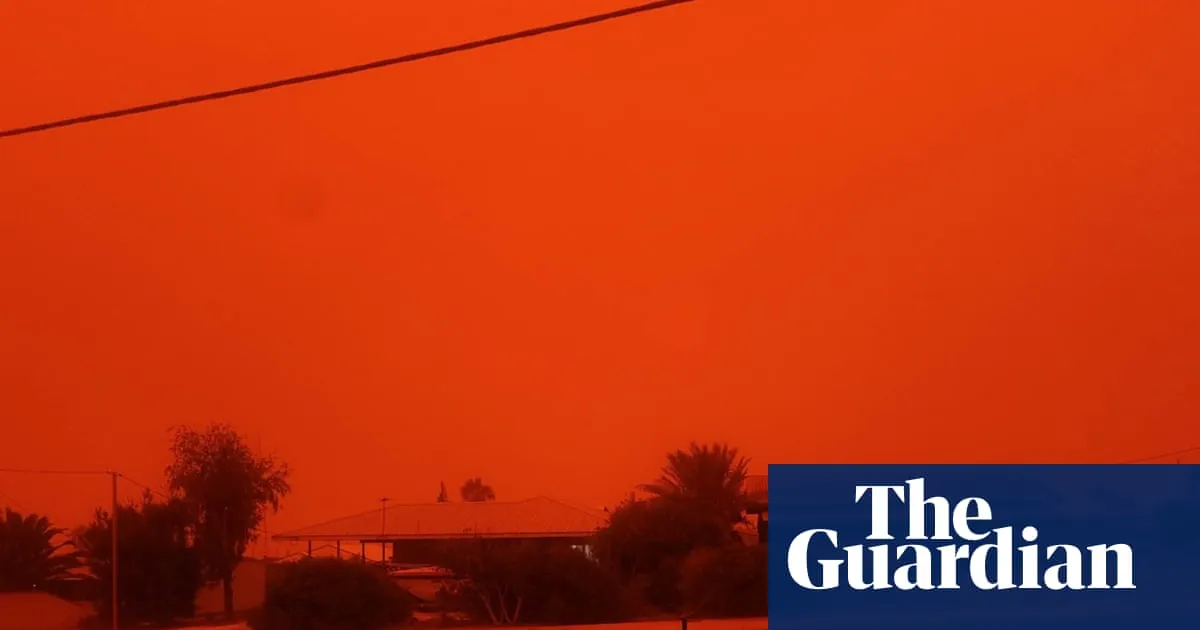
On March 27, 2026, residents of Shark Bay, located roughly 900 kilometers north of Perth, witnessed a stunning and alarming sight as Tropical Cyclone Narelle approached. Just before the cyclone made landfall, the skies turned a blood-red hue, creating an eerie atmosphere that left locals in awe and concern.
The phenomenon was attributed to an iron-infused dust storm, which, combined with high winds and rust-red, iron-rich soils, contributed to the dramatic coloration of the sky. Videos captured online showed the sky appearing to be ablaze with streaks of fiery orange and red, a sight that lasted for several hours according to local reports.
As Narelle crossed into Western Australia, it became the first storm system in over 20 years to make landfall in three of Australia’s states and territories. This historic event has raised concerns about the increasing frequency and intensity of such weather phenomena in the region.
Jessica Lingard, a local resident, noted, “Narelle just whipped, picking up the dust from the landscape and pushing it through places like Shark Bay ahead of the cyclone.” Her observations reflect the unique and unsettling conditions that accompanied the storm.
According to the Shark Bay Caravan Park, the atmosphere was described as “incredibly eerie outside, and everything is covered in dust. Not a lot of wind yet.” This statement underscores the unusual weather conditions that have emerged as the cyclone approached.
As the cyclone continues to impact the region, authorities are monitoring the situation closely. The unusual red sky phenomenon serves as a stark reminder of the power of nature and the potential dangers posed by tropical cyclones.
Residents are urged to stay informed and prepared as the situation develops. The combination of the cyclone’s impact and the dust storm presents significant challenges for those in affected areas.
This sequence of events matters not only for the residents of Shark Bay but also for the broader Australian community, as it highlights the ongoing challenges posed by climate change and extreme weather events.
Details remain unconfirmed regarding the full extent of the cyclone’s impact, but the striking visuals of the red sky will likely remain etched in the memories of those who witnessed it.
