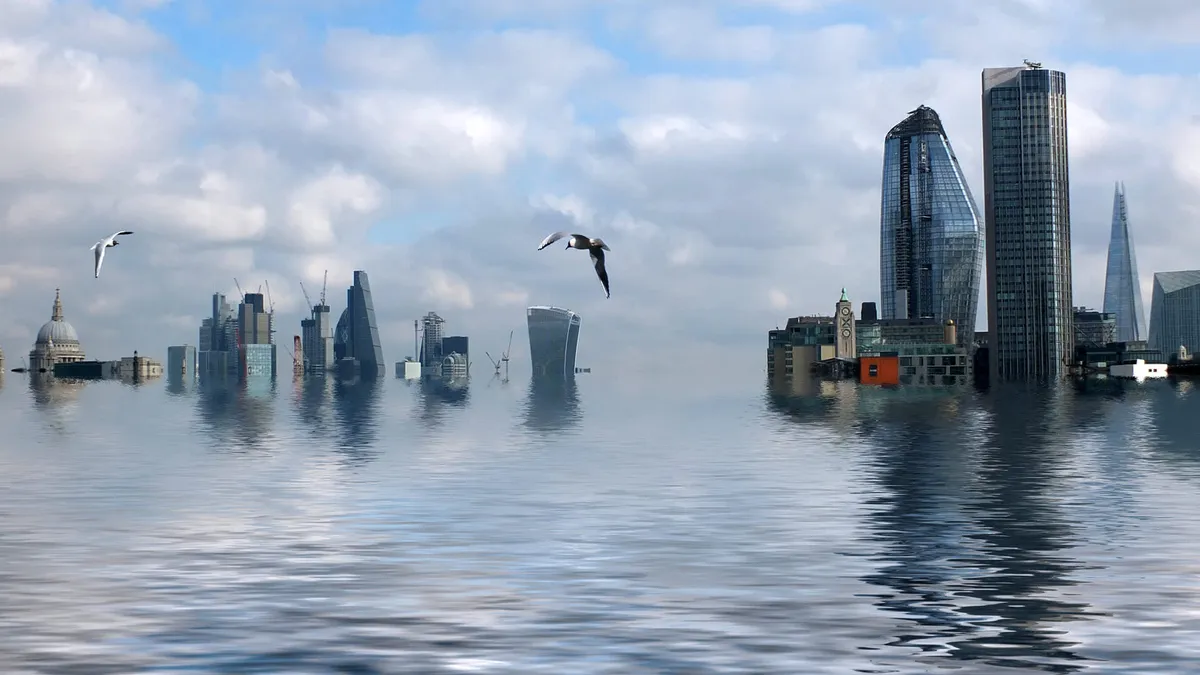
In a stark reminder of the escalating climate crisis, recent reports confirm that the years from 2015 to 2025 are the hottest on record. Specifically, 2025 has been noted as the second or third hottest year, with temperatures reaching approximately 1.43 °C above the 1850-1900 average.
The immediate implications of these rising temperatures are alarming. The ocean has been absorbing carbon dioxide at a staggering rate, equivalent to about eighteen times the annual human energy use each year for the past two decades. This relentless absorption contributes to the ongoing warming of our planet.
Further compounding the crisis, annual sea ice extent in the Arctic has reached record lows, while Antarctic sea ice extent is reported as the third lowest on record. These changes are not merely statistical; they represent a significant shift in our planet’s climate dynamics.
In the Pacific Northwest, projections indicate a temperature increase of 2 °C to 5 °C by 2050 compared to pre-2000 levels. This winter has already been one of the warmest on record across the West, raising concerns about increased avalanche risks due to higher temperatures creating more rain-on-snow days.
Experts are sounding alarms about these developments. Clinton Alden stated, “This winter’s warmth is a harbinger,” emphasizing the urgency of the situation. Meanwhile, John Stimberis highlighted the need for communities to understand when to expect avalanches and when stability may return.
In a surprising twist, a recent study published on March 18, 2026, reveals that beavers could play a crucial role in mitigating climate change. Their wetland activities can offset 1.2% to 1.8% of Switzerland’s annual carbon emissions. Joshua Larsen noted, “Our findings show that beavers don’t just change landscapes: they fundamentally shift how carbon dioxide moves through them.”
Lukas Hallberg further elaborated, stating, “So instead of carbon going into the atmosphere, it gets locked away in soils, sediments, or vegetation.” This highlights the potential for natural solutions in combating climate change.
As the world grapples with these urgent challenges, the call for immediate action grows louder. The climate crisis is not a distant threat; it is a present reality that demands our attention and response.
Details remain unconfirmed regarding the full extent of these changes, but the evidence is mounting. The time to act is now, as the impacts of climate change continue to unfold before our eyes.
