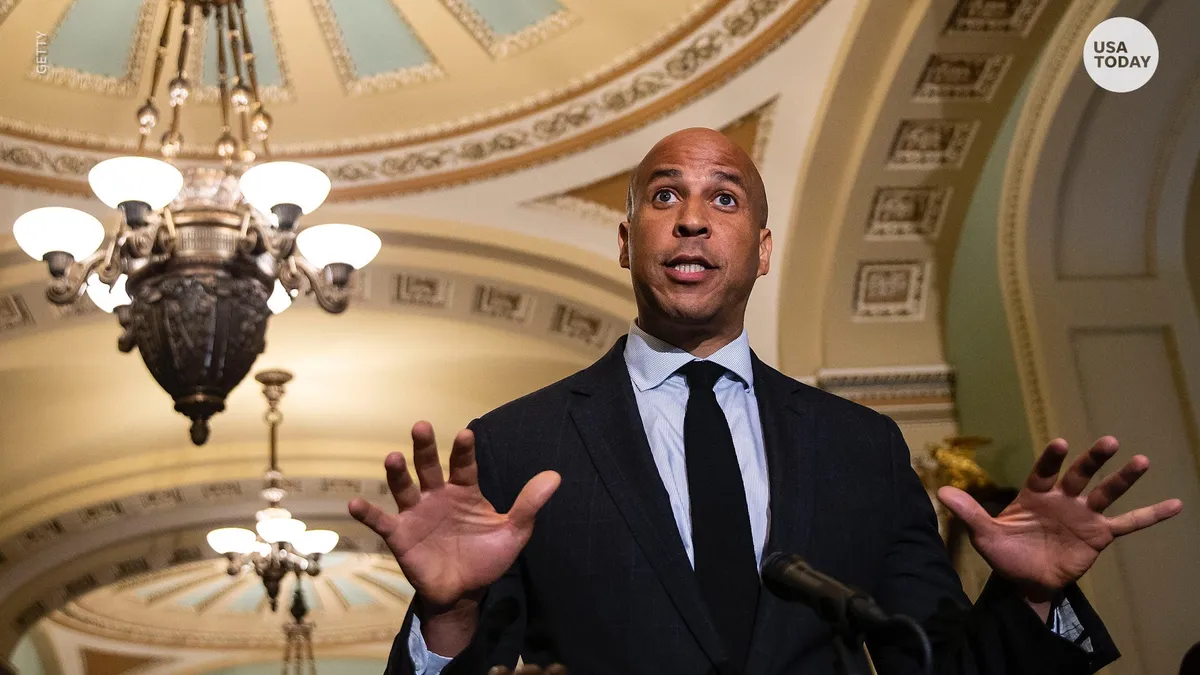
Cory Booker has raised significant concerns regarding the expansion of presidential war powers, particularly in light of the ongoing military campaign in Iran, which he described as the largest military engagement since the war in Afghanistan. His remarks come after the tragic loss of 13 US military members amid the conflict, underscoring the human cost of such military actions.
In a recent statement, Booker criticized both major political parties for what he termed their “feckless” approach to allowing the growth of presidential power. He stated, “I think both parties have been feckless in allowing the growth of the power of the presidency,” emphasizing the need for Congress to reclaim its authority over military engagements.
Booker highlighted the financial implications of the military campaign, noting that it is costing American taxpayers billions of dollars. He expressed his concern that if unchecked, this could lead to further military actions in other countries, stating, “If we allow this to happen, then we give Trump the permission to say, ‘OK, finished with Venezuela, I went to Iran, now I’m going to go to Cuba, now I’m going to North Korea.’” This statement reflects a broader fear among some lawmakers about the potential for escalating military conflicts.
The Senate recently rejected a war powers resolution aimed at curbing the president’s military authority, with a vote tally of 47-53. This outcome has intensified the debate over the appropriate balance of power between Congress and the presidency regarding military actions.
In addition to his critiques on military engagement, Booker has also been active in proposing significant tax reforms. Alongside Senator Chris Van Hollen, he has introduced plans to exempt individuals earning less than $46,000 from federal income taxes. Furthermore, Booker’s proposal would allow Americans to pay no federal income tax on their first $75,000 in earnings.
These tax proposals are expected to have a substantial impact on federal revenue, with Van Hollen’s plan projected to reduce revenue by $1.5 trillion, while Booker’s plan could exceed a reduction of $5.5 trillion. This ambitious approach to tax reform aims to provide relief to middle-class Americans, which Booker describes as a “bold new idea taking the Democrats by storm.”
As these issues unfold, the implications of Booker’s criticisms and proposals remain to be seen. The ongoing military situation in Iran and the political response to it will likely continue to dominate discussions in Washington, DC.
Details remain unconfirmed regarding the potential for further legislative actions in response to the military conflict and the proposed tax reforms.
