Reaction from the field
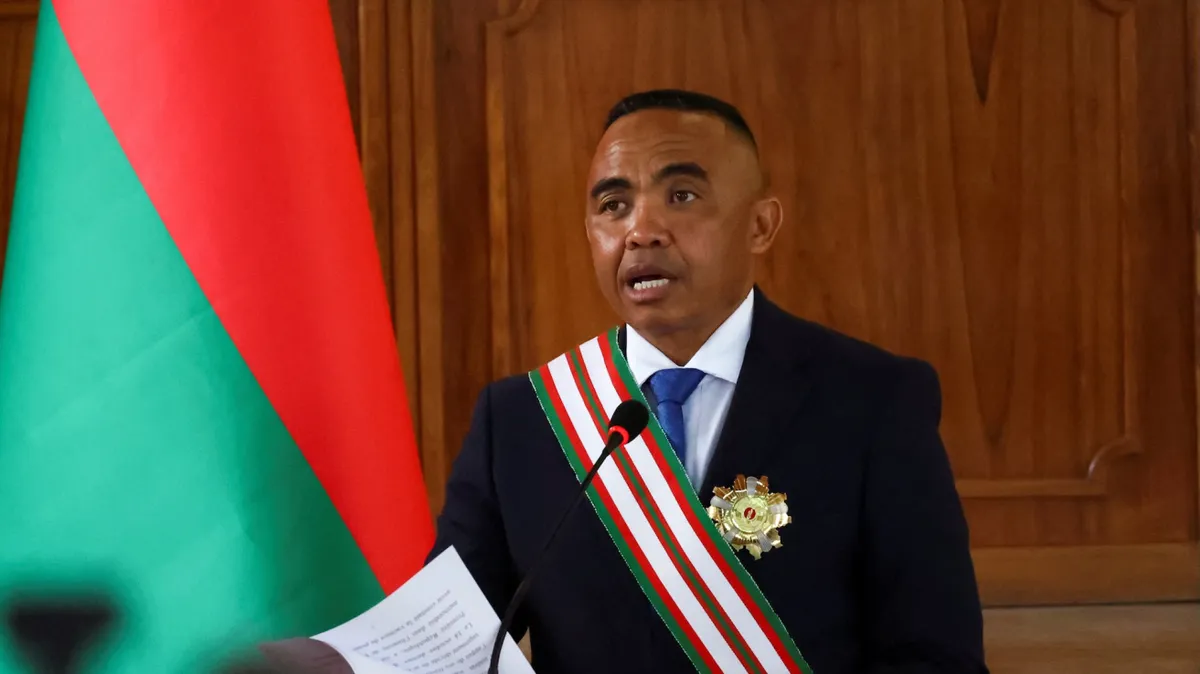
The political landscape in Madagascar has been shaken following a coup that saw Colonel Michael Randrianirina seize power by deposing President Andry Rajoelina on October 12, 2025. This event has not only disrupted the governance of Madagascar but has also raised significant concerns regarding the future of democracy in the region. The African Union (AU) responded swiftly by suspending Madagascar, citing the unconstitutional change of government, while the Southern African Development Community (SADC) opted not to impose sanctions, as power was transferred to Randrianirina through a decision by the High Constitutional Court.
In a related context, thousands gathered in Buenos Aires, Argentina, to mark the 50th anniversary of the country’s last military coup. This national holiday serves as a somber reminder of the estimated 30,000 individuals who disappeared during the dictatorship’s ‘Dirty War’. The juxtaposition of these two events highlights the ongoing struggles against authoritarianism and the quest for democratic governance across different nations.
Justice Elena Kagan posed a provocative hypothetical during a recent U.S. Supreme Court oral argument, questioning whether a president who orders the military to stage a coup could be considered immune from prosecution. “He’s gone. Let’s say this president who ordered the military to stage a coup. He’s no longer president, he wasn’t impeached, he couldn’t be impeached, but he ordered the military to stage a coup. You’re saying that’s an official act. That’s immune?” This inquiry underscores the complexities surrounding the legality of coups and the implications for presidential powers.
Randrianirina has promised to restore a democratic civilian government within 18 to 24 months, a timeline that many observers view with skepticism. The dialogue process to restore civilian rule is expected to be inclusive, yet the actual execution of these promises remains uncertain. The political climate in Madagascar is fraught with tension as citizens and international observers alike watch closely for developments.
The historical context of coups in Latin America and Africa reveals a pattern of military interventions that often lead to prolonged periods of instability and human rights violations. Argentina’s painful history serves as a cautionary tale for Madagascar, where the recent coup has reignited fears of a return to authoritarian rule.
As Argentina reflects on its past, the memory of the military dictatorship looms large, influencing current political discourse and activism. The march in Buenos Aires is not merely a commemoration but a call to action against the potential resurgence of military influence in governance.
Details remain unconfirmed regarding the immediate future of Madagascar’s political situation, but the international community is likely to remain engaged as the situation unfolds. The implications of these events extend beyond national borders, affecting regional stability and international relations.
