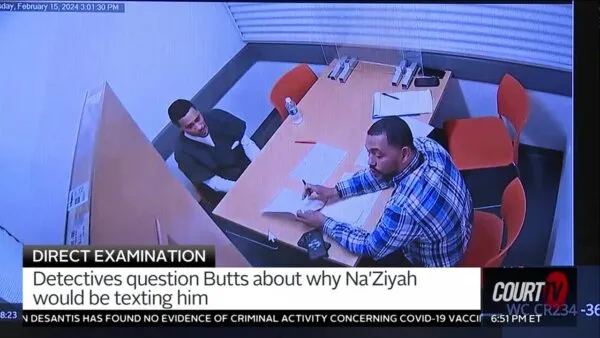
Before the tragic development on March 26, 2026, Jarvis Butts was serving a lengthy prison sentence of 35 to 60 years for the second-degree murder of 13-year-old Na’Ziyah Harris. His conviction was a pivotal moment for the Harris family, who had sought justice since Na’Ziyah’s body was never found. The expectation was that Butts would face the consequences of his actions over the coming decades.
However, the situation took a decisive turn when Butts was found dead in a Michigan Department of Corrections facility, located approximately 75 miles west of Detroit. Reports indicate that his death is being treated as a suicide, a shocking development that has left many questioning the circumstances surrounding his demise.
At the time of his death, Butts was 43 years old and had recently pleaded guilty to the murder charge on February 12, 2026. His plea agreement was seen as a means to provide some closure to Na’Ziyah’s family, as emphasized by Wayne County Prosecutor Kym Worthy, who stated, “One of the most important aspects of the plea agreement was giving Na’Ziyah’s family some semblance of closure.”
The Michigan State Police were alerted to the situation at 6:45 a.m. on the day of Butts’ death, initiating a death investigation. MDOC staff attempted life-saving measures, but they were unsuccessful, as confirmed by Jenni Riehle, a spokesperson for the department.
The implications of Butts’ death extend beyond the immediate loss of a convicted murderer. It raises questions about the mental health resources available to inmates and the overall conditions within the prison system. Experts have long pointed out the need for improved support systems to prevent such tragedies.
Moreover, uncertainties linger regarding Na’Ziyah Harris’s case. Despite Butts’ guilty plea, her body has never been recovered, leaving her family in a state of unresolved grief. Details remain unconfirmed about the exact circumstances surrounding Butts’ death, adding another layer of complexity to an already tragic story.
As the investigation unfolds, the focus will likely shift to the broader implications for the Michigan Department of Corrections and the ongoing challenges within the criminal justice system. The tragic end of Jarvis Butts serves as a stark reminder of the unresolved pain experienced by victims’ families and the systemic issues that persist in addressing mental health and inmate welfare.
