The wider picture
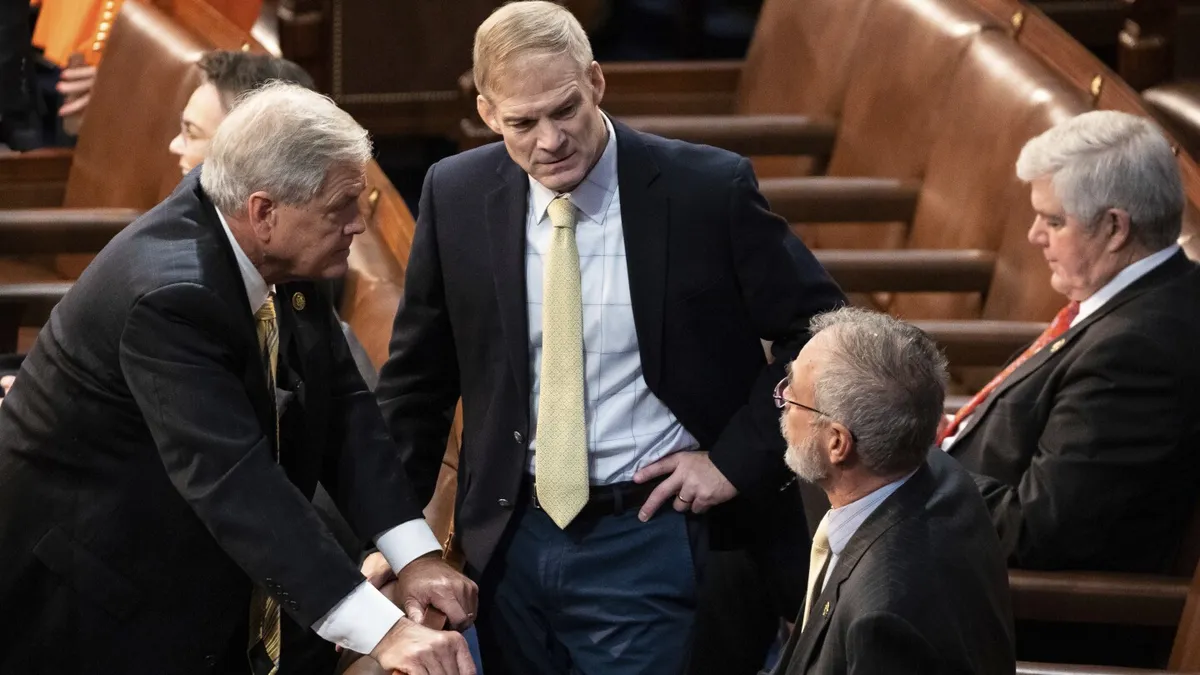
Jim Jordan, the House Judiciary Chair, has been undergoing a significant rebranding effort over the past three years to broaden his support within the Republican Party. His previous hardline stance, particularly his refusal to support non-Freedom Caucus members, has impacted his leadership aspirations. However, Jordan is now perceived to be preparing for a leadership bid, especially if Republicans lose their majority in the upcoming elections.
Recently, Jordan has raised over $1.3 million for the National Republican Congressional Committee, showcasing his fundraising prowess. This financial backing is crucial as he navigates a competitive landscape that includes other potential candidates like Steve Scalise and Tom Emmer. Jordan’s ability to attract funds has been complemented by a shift in his policy stances, aimed at appealing to a broader base within the party.
Despite his efforts, Jordan’s approach has caused some division among Freedom Caucus members. His statement, “It wasn’t my job to help you then,” reflects a past reluctance to support certain colleagues, which may haunt him as he seeks to unify the party. Yet, he has also expressed a commitment to helping all Republicans, stating, “I just help everyone, that’s always been my mindset.” This duality in his approach raises questions about his true intentions and the potential for unity within the party.
Jordan’s previous campaign efforts for candidates who opposed him during his speaker bid demonstrate his willingness to adapt and forge alliances. However, observers note that his changing policy stances may impact his support within the party. As one anonymous source remarked, “It wouldn’t be very smart to not think about the possibility of losing the majority.” This sentiment underscores the urgency of Jordan’s potential leadership bid.
While Jordan has publicly stated he is focused on helping Republicans maintain their majority, the exact nature of his leadership ambitions remains unclear. Details remain unconfirmed, and his lack of a public declaration regarding a leadership bid adds to the uncertainty surrounding his future role in the party.
As the political landscape evolves, Jordan’s ability to navigate these complexities will be critical. His fundraising efforts, coupled with a more inclusive approach, may bolster his chances, but the competition from Scalise and Emmer cannot be overlooked. Observers are keenly watching how these dynamics will unfold in the coming months.
In the backdrop of these developments, former Speaker Kevin McCarthy’s influence and the ongoing legal challenges faced by figures like Jack Smith and Donald Trump further complicate the Republican narrative. Jordan’s positioning in this context will be pivotal as he seeks to solidify his standing within the party.
