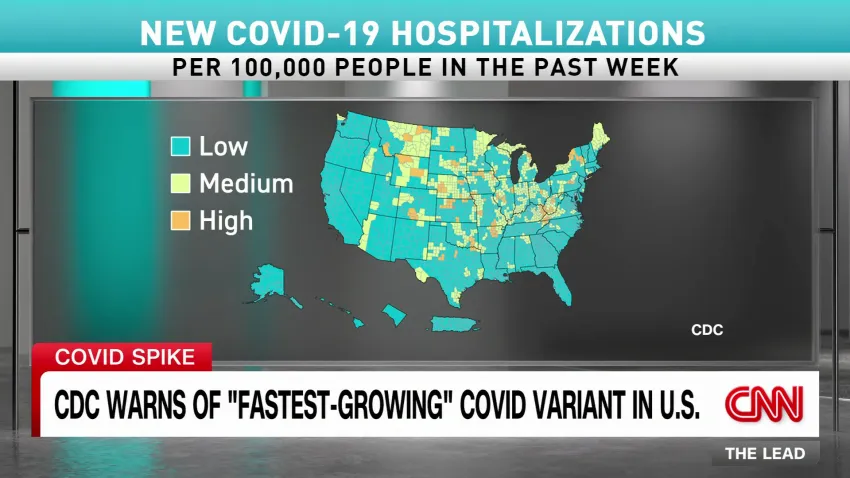
BA.3.2, also known as ‘Cicada’, is a heavily mutated COVID-19 variant that may evade immunity from vaccines or prior infections. First identified in November 2024 in South Africa, this variant has now spread to at least 25 states in the United States.
As of February 11, 2026, BA.3.2 has been detected in at least 23 countries, raising alarms among health officials. With 70-75 mutations in its spike protein, BA.3.2 is distinct from other variants, prompting concerns about its transmissibility and potential impact on public health.
The variant was first detected in the U.S. on June 27, 2025, at San Francisco International Airport. The World Health Organization classified BA.3.2 as a ‘variant under monitoring’ in December 2025, indicating its significance in the ongoing pandemic.
Current COVID vaccines are expected to continue providing protection against severe disease from BA.3.2. However, experts warn that the variant’s mutations may allow it to evade some immune responses. Dr. Andrew Pekosz, Ph.D., stated, “It has a lot of mutations that may cause it to look different to your immune system.”
Despite the concerns, there is currently no evidence that BA.3.2 is causing more severe disease or hospitalizations compared to other variants. Dr. Robert H. Hopkins, Jr. remarked, “I have not seen any data which indicates that Cicada is any more severe than other circulating variants.”
In terms of symptoms, BA.3.2 presents similarly to other COVID-19 variants, including cough, fever, sore throat, and fatigue. It has also been detected in wastewater samples, indicating its presence in the population.
As of now, BA.3.2 accounts for about 30% of COVID-19 sequences in Germany and some Northern European countries. In the U.S., it is estimated that 3.7% of wastewater samples nationwide have detected the variant.
Health officials are closely monitoring the situation, but the exact impact of BA.3.2 on public health and its potential to cause a surge in cases is still unclear. Details remain unconfirmed.
Experts continue to emphasize the importance of vaccination and antiviral treatments, with Dr. Adolfo García-Sastre stating, “The new variant is still sensitive to COVID antiviral drugs that we have been developing, so at least those will work.”
