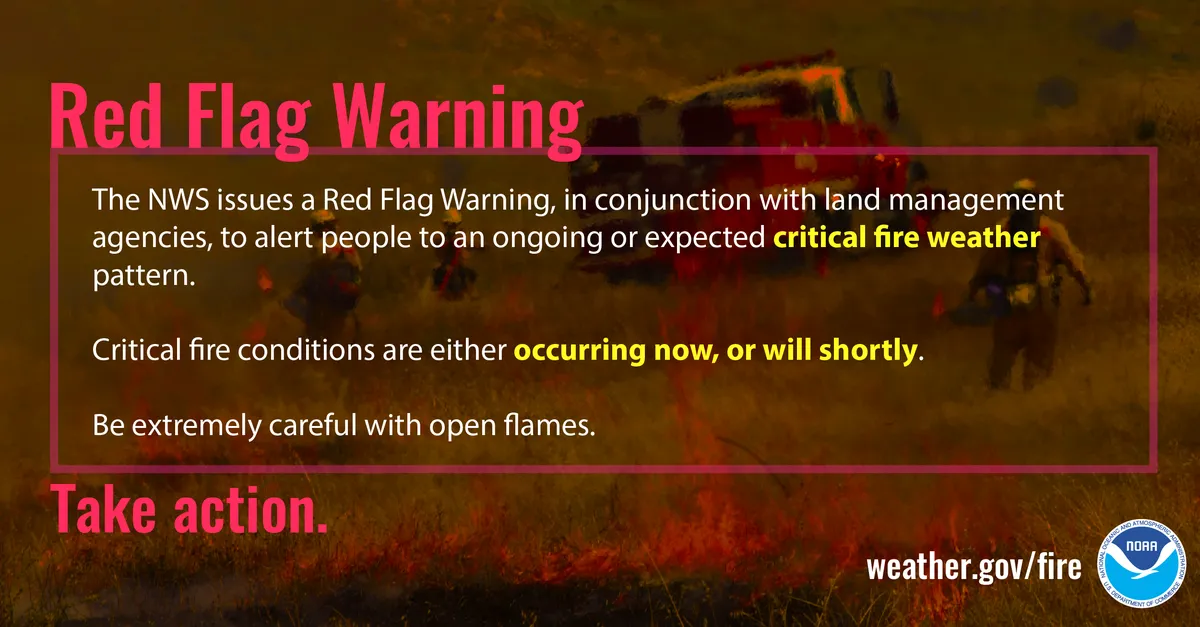
A red flag warning is now in effect for much of Minnesota, a significant shift from previous expectations of milder weather. This warning, which will last from noon to 7 p.m. on Saturday for most areas, highlights the urgent need for caution as critical fire weather conditions develop.
Before this warning, residents anticipated a typical spring day. However, the decisive moment came with the National Weather Service’s announcement, indicating that warmer temperatures, low humidity, and strong winds would create an environment ripe for fire hazards.
Specifically, portions of southern Minnesota will face heightened risks from 10 a.m. to 9 p.m. on Saturday. Wind gusts are expected to reach up to 45 mph, while humidity levels are projected to plummet into the teens, with some areas like Rapid City forecasted to hit just 17% humidity.
The implications of this warning are severe. The National Weather Service cautions that any fires that develop will spread rapidly, putting both lives and property at risk. “Outdoor burning is not recommended,” officials stress, urging residents to take the warning seriously.
In addition to Minnesota, neighboring Iowa is also affected, with areas such as Mitchell, Howard, Floyd, and Chickasaw under similar warnings. This widespread alert underscores the critical nature of the situation across the central United States.
Experts emphasize that a red flag warning indicates that critical fire weather conditions are either occurring now or will shortly. The combination of high winds and low humidity creates a volatile environment for any potential fire.
As the situation develops, residents are advised to stay informed and prepared. The forecast for Rapid City, which includes a record-breaking temperature of 80 degrees, further complicates the fire risk, as it breaks a record that has stood since 1893.
In summary, the red flag warning serves as a crucial alert for Minnesotans and surrounding areas, highlighting the urgent need for vigilance against potential fire outbreaks. With conditions ripe for rapid fire spread, the call for caution is clear.
