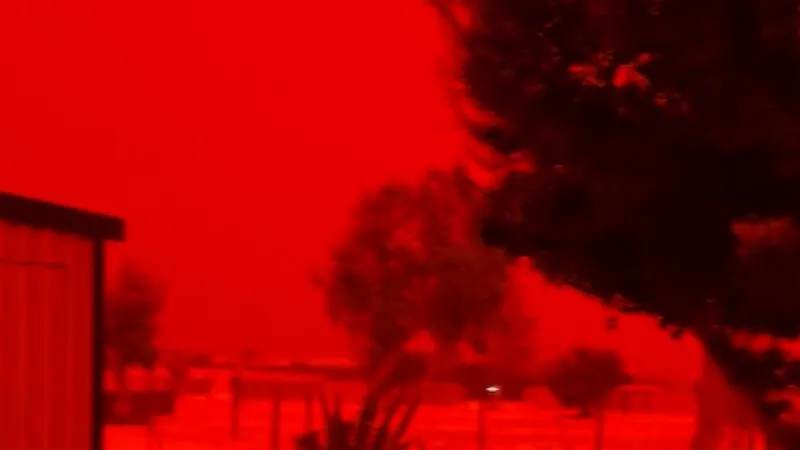
On March 27, 2026, Tropical Cyclone Narelle intensified to Category 4, unleashing devastating winds exceeding 250 km/h in Exmouth, Western Australia. As the cyclone approached, residents witnessed a striking red sky, a phenomenon caused by iron-rich dust being lifted into the atmosphere.
The cyclone’s powerful winds have led to widespread damage, particularly in Exmouth, where emergency services reported critical outages. Despite the destruction, there have been no reported injuries, a fortunate outcome given the severity of the conditions.
As the storm progressed, winds were forecasted to remain dangerously high, with predictions of 180-190 km/h. Queensland Premier David Crisafulli remarked, “In many cases it will be the strongest wind people have experienced in this part of the state for a long, long time.” This warning highlights the unprecedented nature of the cyclone’s impact.
Grower Doriana Mangili expressed concern about the potential devastation to local agriculture, stating, “If the winds are as they are forecast – which at the moment is forecast to be 180-190km/h – then we would unlikely to have any bananas left standing.” This underscores the cyclone’s potential long-term effects on the region’s economy.
While the cyclone has since been downgraded, emergency alerts remain in place as conditions continue to pose risks. The phenomenon of red skies, reminiscent of a similar incident in 2009 that saw dust carried thousands of kilometers, has captivated and alarmed residents alike.
As recovery efforts begin, the disruption to major gas operations due to damaged infrastructure raises concerns about energy supply in the region. The full extent of the damage is still being assessed, and details remain unconfirmed.
Authorities are urging residents to remain vigilant and heed safety warnings as cleanup and restoration efforts commence. The aftermath of Tropical Cyclone Narelle serves as a stark reminder of the power of nature and the importance of preparedness in the face of such events.
