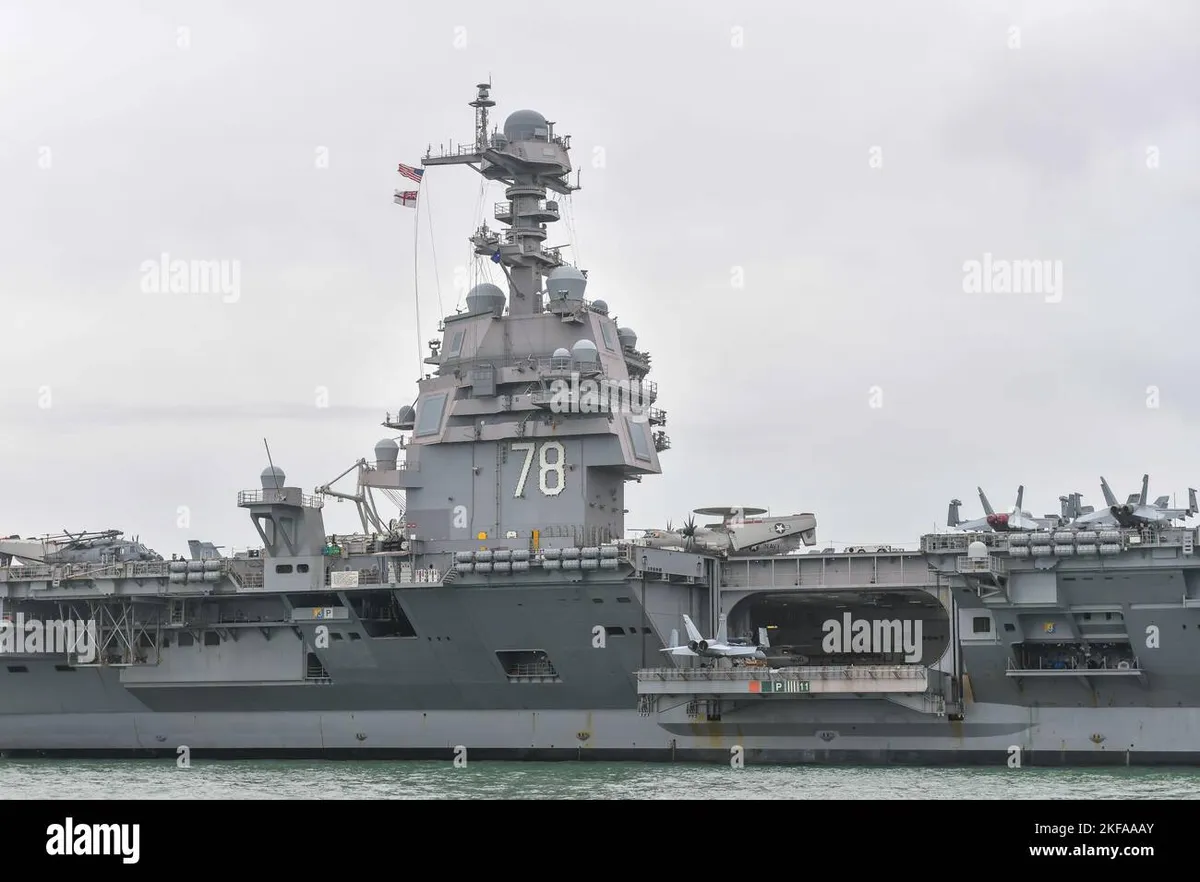
In a significant development, the USS Gerald R. Ford, the largest and most powerful aircraft carrier in the United States Navy, experienced a fire in its laundry department in mid-March 2026. The incident occurred while the vessel was deployed in the eastern Mediterranean Sea, raising urgent concerns about the safety and operational capabilities of the ship and its crew.
The fire, which took approximately 30 hours to extinguish, resulted in approximately 600 sailors losing access to their bunks due to fire damage. Fortunately, no sailors were seriously injured during the incident, but the event has highlighted the ongoing challenges faced by the crew aboard the USS Gerald R. Ford, which is currently on track to break the record for the longest deployment of an aircraft carrier since the Vietnam War.
With about 4,500 sailors and dozens of tactical aircraft on board, the USS Gerald R. Ford has been involved in military operations in Iran and Venezuela under President Donald Trump’s administration. This deployment has been extended twice by the military, underscoring the strategic importance of the carrier in maintaining U.S. presence in critical regions.
Brent Sadler, a military expert, emphasized the significance of the USS Gerald R. Ford, stating, “If we didn’t have the Ford, we would be struggling to maintain an operational presence, but we’d also be struggling to keep our aircraft carriers ahead of our enemies.” This statement reflects the broader context of U.S. military operations and the necessity of maintaining a robust naval presence.
The USS Gerald R. Ford, which boasts a cost of $13 billion, is the newest of the 11 U.S. nuclear-powered aircraft carriers. Its advanced electronic catapult system allows it to launch a variety of aircraft, a unique capability among U.S. aircraft carriers. This technological edge is crucial for the U.S. Navy as it navigates complex geopolitical landscapes.
As the crew continues to adapt to the stresses of deployment, the presence of Sage, a therapy dog, has been a source of comfort for sailors since 2023. Amini Osias, a sailor aboard the carrier, expressed the emotional toll of the situation, saying, “It’s constant uncertainty that we live on a daily basis.” This sentiment resonates with many service members who face the challenges of extended deployments.
While the fire incident has raised immediate concerns, it also serves as a reminder of the ongoing operational demands placed on the USS Gerald R. Ford and its crew. As military operations continue in volatile regions, the ability of the carrier to maintain its mission readiness remains critical.
Details remain unconfirmed regarding any further implications from the fire incident, but the situation is being closely monitored by military officials and families of the sailors on board. The USS Gerald R. Ford’s deployment continues to be a focal point of U.S. military strategy in the region.
