Harper’s Statement on FanDuel Video
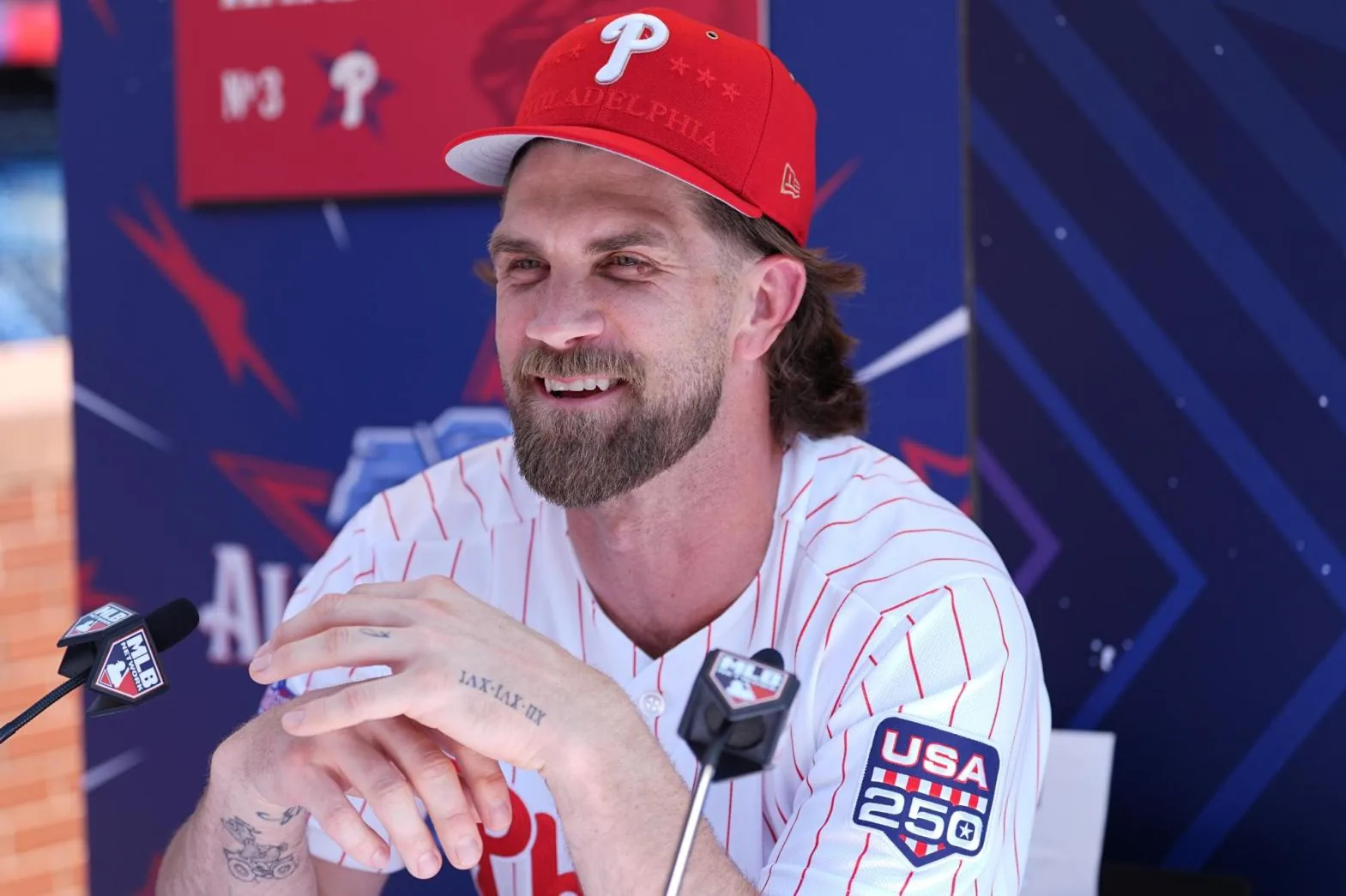
Philadelphia Phillies slugger Bryce Harper has stated he was unaware a personalized video he recorded through the Cameo app would be utilized by FanDuel as a reward for a VIP customer. The customer, Terry Thompson, later initiated a lawsuit against the sportsbook, alleging that it exploited his gambling addiction. Harper shared a screenshot of the Cameo request on social media, emphasizing that he would not have created the video had he known FanDuel’s true intentions or anything about Thompson’s personal circumstances.
The video, which was marked with FanDuel’s logo, featured Harper addressing Thompson by name and mentioning his young son. Harper indicated in the video that he was fulfilling a request from Thompson’s VIP manager at FanDuel, identified as “your host Bryttanni at FanDuel.” Harper addressed the situation publicly on a Monday social media post, just hours before his scheduled participation in the Home Run Derby.
In his post, Harper explicitly stated, “I did not know FanDuel would do this. I did not consent to it, and FanDuel had no right to do it.” FanDuel, when asked for comment, affirmed its dedication to promoting responsible gaming and safeguarding its customers. The company highlighted that its employees receive training to identify and flag indicators of problem gambling, offering resources and tools, and continuously reviewing and strengthening policies to enhance consumer protection initiatives.
Details of the Lawsuit and VIP Program
Reports indicate that Terry Thompson wagered a significant amount, totaling $18.5 million, with FanDuel, which led to his VIP status. This status reportedly included exclusive benefits, such as champagne and Super Bowl tickets, which he claims encouraged further gambling. Thompson ultimately incurred losses amounting to $1.5 million with FanDuel, according to a lawsuit filed in March in Common Pleas Court in Philadelphia by the Public Health Advocacy Institute on his behalf.
The lawsuit, which also names DraftKings, alleges that both sportsbook companies use their products and VIP services to intentionally maximize addiction. Thompson’s legal representatives declined to make him available for comment. The lawsuit details that Thompson resorted to taking out second and third mortgages on his home, which subsequently faced foreclosure, and sold shares of an investment company he had managed for two decades to cover his losses.
By late February, Thompson’s lawsuit claims he lost his final $10,000 on a DraftKings parlay bet. His total losses, according to the lawsuit, approached $2 million. Feeling unable to disclose the extent of his financial ruin to his family, Thompson reportedly contacted his therapist, who then alerted the police, leading to officers intervening to prevent him from self-harm.
Industry Concerns and Athlete Involvement
The personalized video from Harper to a VIP customer with a gambling addiction has raised questions within the sports industry. While Major League Baseball’s policy does not explicitly address interactions with VIP gamblers, this instance presents a unique challenge regarding the proximity players are permitted to have with gambling companies. There is no indication that Harper has an official partnership with FanDuel or was aware of Thompson’s addiction.
Experts familiar with the intersection of professional sports and the gambling industry have voiced concerns. Danny Funt, author of a book on sportsbook VIP programs, noted that while VIP bettors might interact with former athletes, an active player, especially a former MVP, recording such a personal message is unprecedented. Leigh Steinberg, a prominent sports agent, described the Harper video as “bad for sports,” advising against promotional work for sportsbook companies due to potential brand implications.
MLB’s collective bargaining agreement, set to expire in December, allows athletes to appear in advertisements or make personal appearances for casinos, racetracks, or sportsbook companies, provided they do not encourage betting on baseball. Other leagues, such as the NFL, prohibit players from marketing or promoting any form of gambling, while the NBA permits players to engage in promotional work for gambling companies under certain conditions. Harper, 33, has maintained a highly marketable career spanning 15 years, with various endorsement deals.
Jodi Balsam, a former NFL attorney and sports law professor, suggested that even if Harper’s video adheres to baseball policy, it raises ethical questions about the league’s relationship with gambling companies, particularly given the increasing scrutiny of their business practices. Balsam questioned whether the sportsbook company intentionally sought the video for an addicted gambler to maximize their financial engagement. Harper is not named as a defendant in the lawsuit filed by the Public Health Advocacy Institute.
The U.S. Supreme Court ruled in 2018 that states could legalize sports betting, leading to lucrative partnerships between sports leagues and sportsbook companies, whose advertisements are now common in stadiums and during broadcasts.
Read Also
Source: denverpost.com
