Open Championship penalty decision
Bryson DeChambeau was assessed a two-shot penalty following his second round at the Open Championship at Royal Birkdale. The ruling by R&A officials came after video evidence emerged of DeChambeau’s actions on the fifth hole, where he was preparing for his second shot. The penalty was issued for “inadvertently improving the area of his intended swing.”
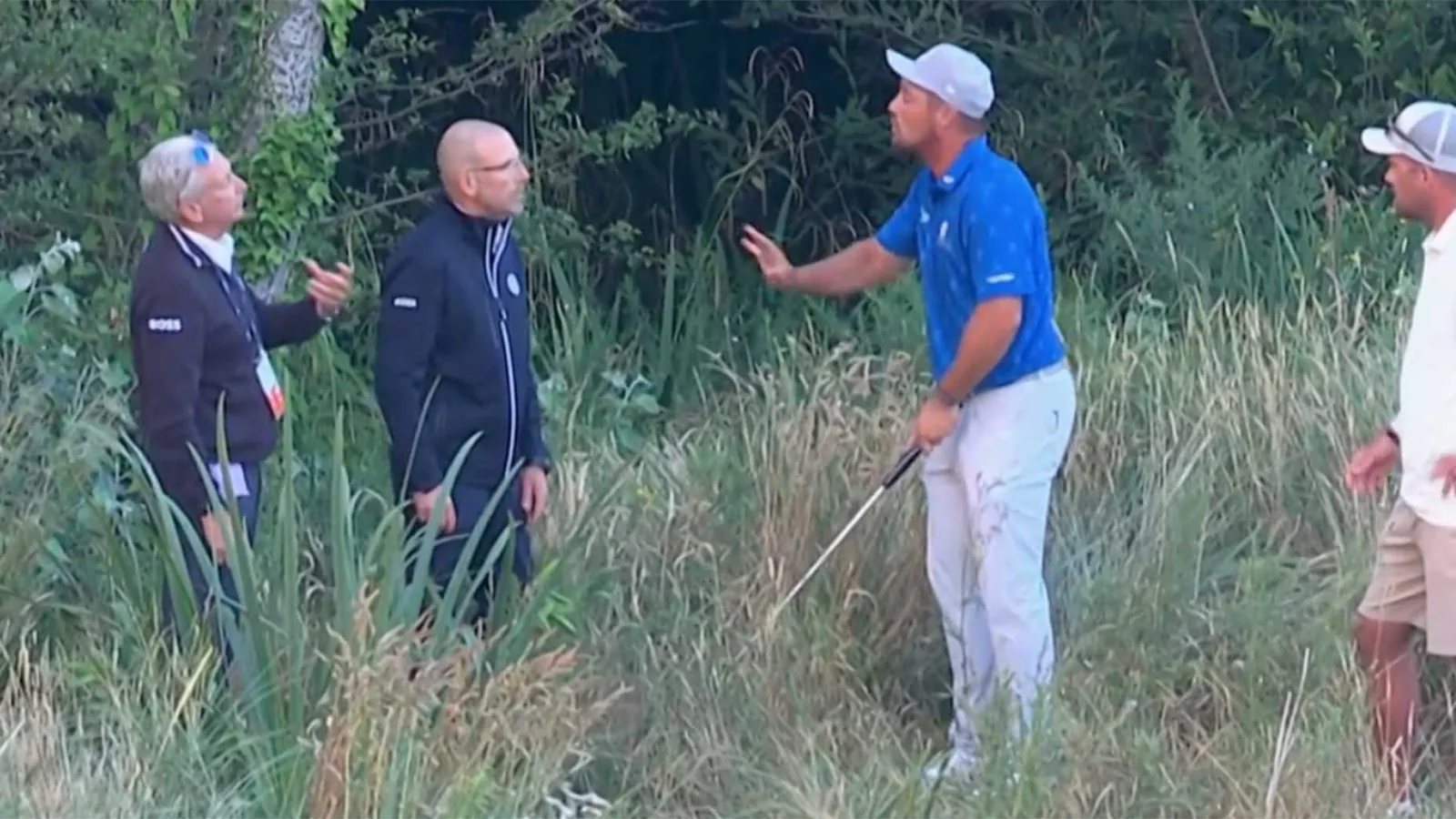
The incident occurred in the fescue to the left of the fairway on the par-4 fifth hole. Footage showed DeChambeau stepping on the tall grass behind and next to his ball while assessing a 72-yard wedge shot. Golf rules stipulate that players must play the course as they find it, and Rule 8.1b prohibits moving, bending, or breaking any growing or attached natural objects to improve a lie. While DeChambeau denied any wrongdoing, R&A officials contended that his actions, specifically his high-stepping in the high grass, improved his situation.
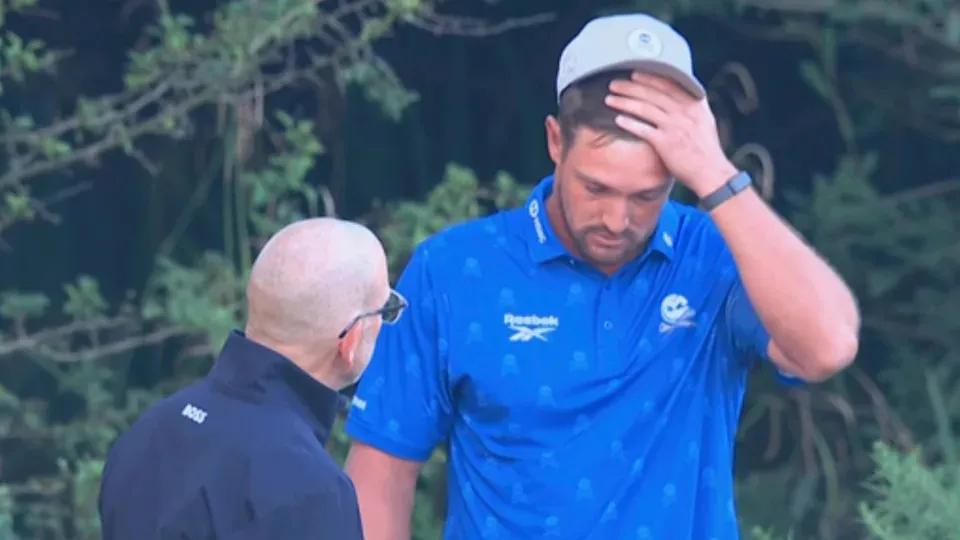
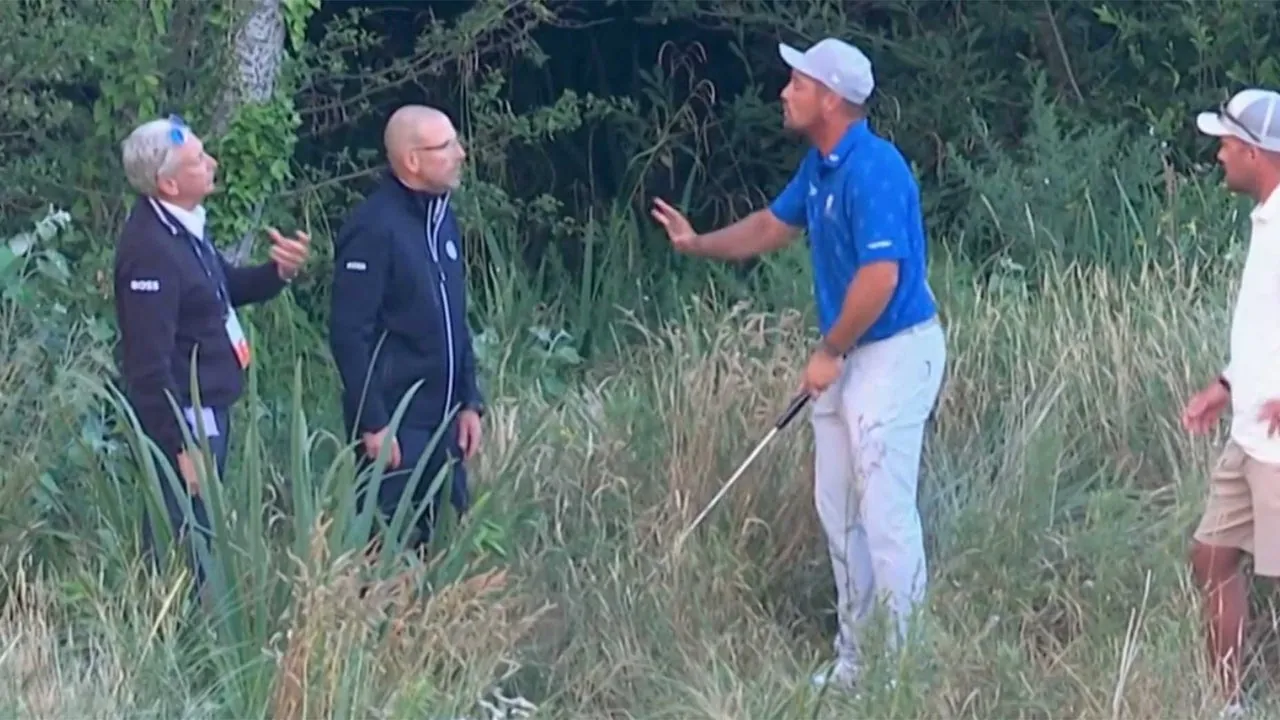
The discussion surrounding the alleged violation unfolded in front of television cameras. DeChambeau revisited the site of the incident with officials to argue his case before signing his scorecard. This conversation reportedly became heated, with DeChambeau gesticulating as he defended his actions and reputation. The exchange lasted over 10 minutes, with cameras recording the entire time.
Charlie Maran, an R&A rules official, commented on the situation, stating that players must be careful around the ball and that the core issue was whether DeChambeau’s actions improved his lie. NBC analyst Jim Furyk, observing the sequence, suggested DeChambeau might argue the grass was well behind the ball and not in his swing path, given his vertical club pickup and ball placement.
The ruling and its implications
Despite DeChambeau’s arguments, the potential defense did not sway the R&A. After further deliberation in the scoring hut, the official ruling was announced by Grant Moir, the Open’s chief referee. Moir explained that DeChambeau received a two-stroke penalty for inadvertently improving the area of his intended backswing on the fifth hole.
Moir clarified that the rule restricts actions that improve protected conditions affecting a stroke, including the area of a player’s intended swing. He emphasized that an improvement means altering conditions to gain a potential advantage, and this applies even if the action is accidental, as it was in DeChambeau’s case. The area of intended swing encompasses any part of the backswing, downswing, or completion of the swing that might reasonably be affected. The prohibited action involves moving, bending, or breaking any growing or attached natural object.
Players are permitted to take a reasonable stance, but they must use the least intrusive course of action. They are not entitled to a normal stance or swing if it means improving conditions. Moir reiterated that the rule applies regardless of intent. Following the ruling, DeChambeau, who declined to speak with the media, went to the driving range. His manager, Brett Falkoff, indicated that DeChambeau was undecided about continuing to play in the 154th Open Championship and would announce his decision on Saturday morning. Falkoff stated that DeChambeau is not a cheater.
The penalty dropped DeChambeau from solo second place to a tie for fifth, three shots behind the leader, Lucas Herbert. The decision sparked debate among golf commentators. Some, like Jessica Marksbury, felt DeChambeau deserved the benefit of the doubt, suggesting the footage did not clearly show intentional stomping or significant improvement to his lie. Marksbury also expressed annoyance at the intense scrutiny of player behavior in such situations, particularly when doubt exists and hours have passed since the incident.
Jake Morrow argued that the lie itself was never improved and that DeChambeau’s actions were part of a normal pre-shot routine. He questioned the logic of penalizing an accidental action, especially when officials acknowledged it was unintentional. Josh Sens, while acknowledging DeChambeau’s understandable frustration, suggested that threatening to withdraw was a “juvenile” reaction. Sens believed DeChambeau’s proper response should be to accept the ruling and aim to win the tournament despite it.
Nick Piastowski and Josh Schrock supported the penalty, citing Rule 8.1a, which prohibits moving, bending, or breaking natural growing objects if it improves the area of the intended swing, regardless of intent. Schrock viewed it as the R&A making the right call to protect the sport and its rules. Dylan Dethier, however, questioned the certainty of the decision given the high stakes and the inconclusive nature of the evidence.
Read Also
Source: sports.yahoo.com
