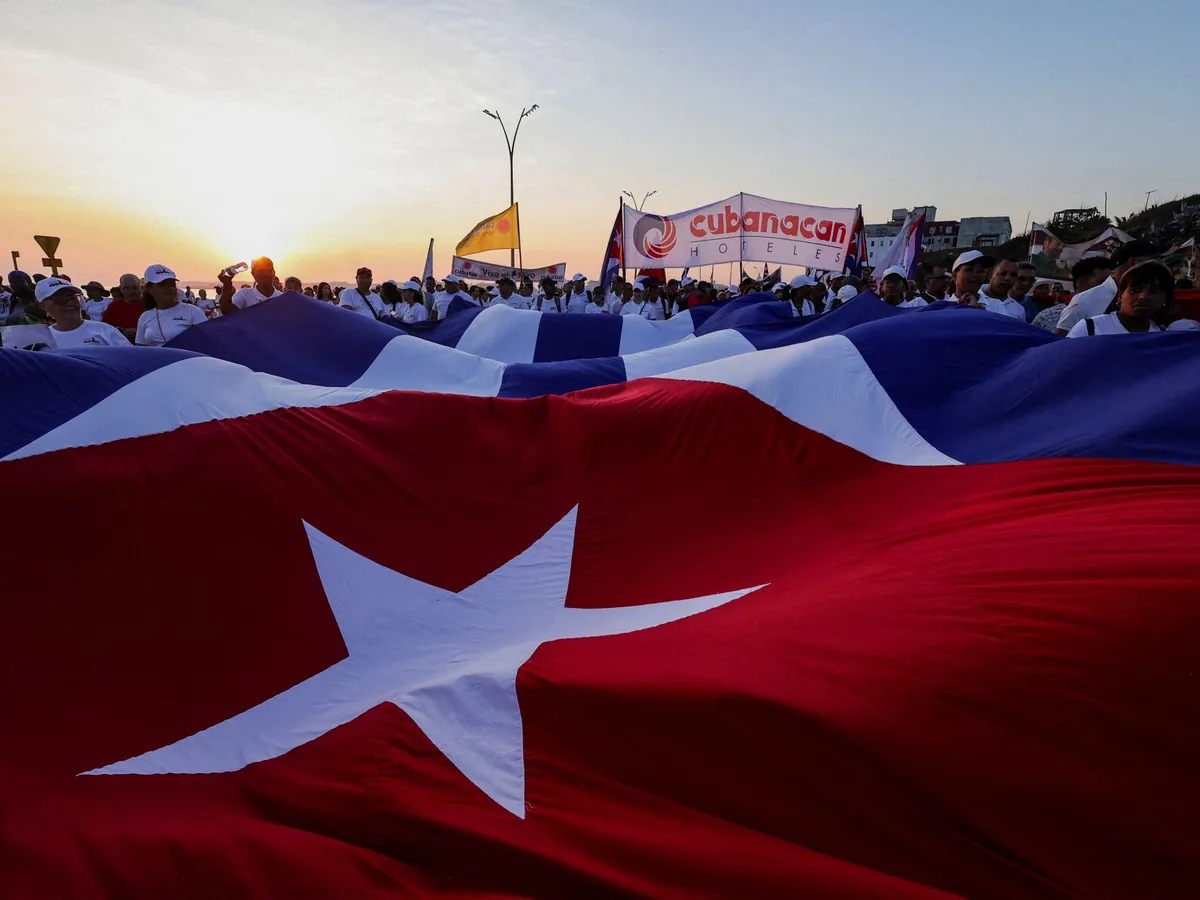
On May 1, 2026, President Donald Trump expanded sanctions against the Cuban government, coinciding with his controversial remarks about Cuba being an ‘unusual and extraordinary threat’ to the United States.
Cuban Foreign Minister Bruno Rodriguez condemned the sanctions as ‘unilateral coercive measures.’ He emphasized that the US has no right to impose restrictions on Cuba. The Cuban economy faces severe challenges due to these sanctions, which target individuals and groups aiding the Cuban government’s security forces.
In a notable development, the US Senate voted against a resolution aimed at preventing military action against Cuba. The vote was 51 to 47, indicating a divided stance on US foreign policy regarding the island.
The new sanctions also impose travel restrictions on certain individuals linked to the Cuban government. This escalation follows frequent power blackouts in Cuba, attributed to a severe fuel shortage exacerbated by existing sanctions.
President Trump stated, “Cuba is next,” fueling speculation about potential military involvement. However, officials have not clarified whether his comments were serious or intended as humor.
Key quotes:
Bruno Rodriguez: “These measures are extraterritorial in nature and violate the United Nations Charter.” and Miguel Díaz-Canel: “The sanctions amount to collective punishment against the Cuban people.”.
The situation remains fluid as uncertainties persist regarding which specific individuals or entities will be affected by these new measures. The implications for US-Cuba relations could be significant in the coming days.
