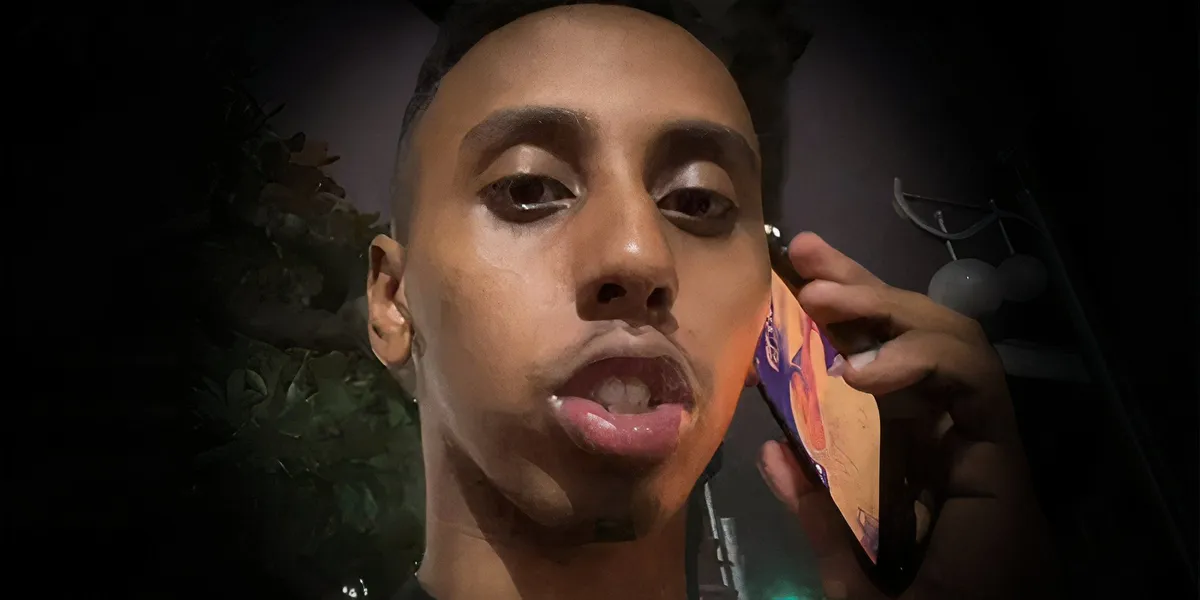
In a significant legal development, Johnny Somali, whose real name is Ramsey Khalid Ismael, was sentenced to six months in prison by a South Korean court on April 15, 2026. He was found guilty of public nuisance and distributing artificial intelligence-generated sexual content.
The court’s decision comes after Somali uploaded a controversial video in October 2024, where he was seen kissing a statue memorializing comfort women, a sensitive issue that has historically strained relations between South Korea and Japan. The Seoul Western District Court emphasized that Somali’s actions were not only disrespectful but also harmful to the public.
At just 25 years old, Somali’s legal troubles began when he was indicted in November 2024. The court noted that he repeatedly committed offenses against unspecified members of the public to generate profit via YouTube, disregarding Korean law.
In addition to his prison sentence, Somali has been ordered to serve 20 days of detention. Following his release, he will be barred from working at institutions serving minors and people with disabilities for five years, highlighting the court’s concern for public safety.
A representative of the Seoul Western District Court stated, “The court has sentenced him to six months in prison,” reinforcing the seriousness of the offenses. Somali expressed remorse during the proceedings, stating, “I was remorseful and wanted to apologize to the people of Korea.” His apology, however, may not mitigate the legal consequences he faces.
Somali’s case has drawn attention not only for its legal implications but also for its cultural sensitivity, given the historical context surrounding comfort women statues. These memorials have been a focal point of diplomatic tensions between South Korea and Japan, making Somali’s actions particularly provocative.
As the situation develops, Somali has been banned from leaving South Korea, ensuring that he remains under the jurisdiction of the court. The ruling has sparked discussions about the responsibilities of content creators and the legal boundaries surrounding online behavior.
Details remain unconfirmed regarding any potential appeals from Somali’s legal team. The case serves as a stark reminder of the intersection between social media, cultural sensitivity, and the law in today’s digital age.
