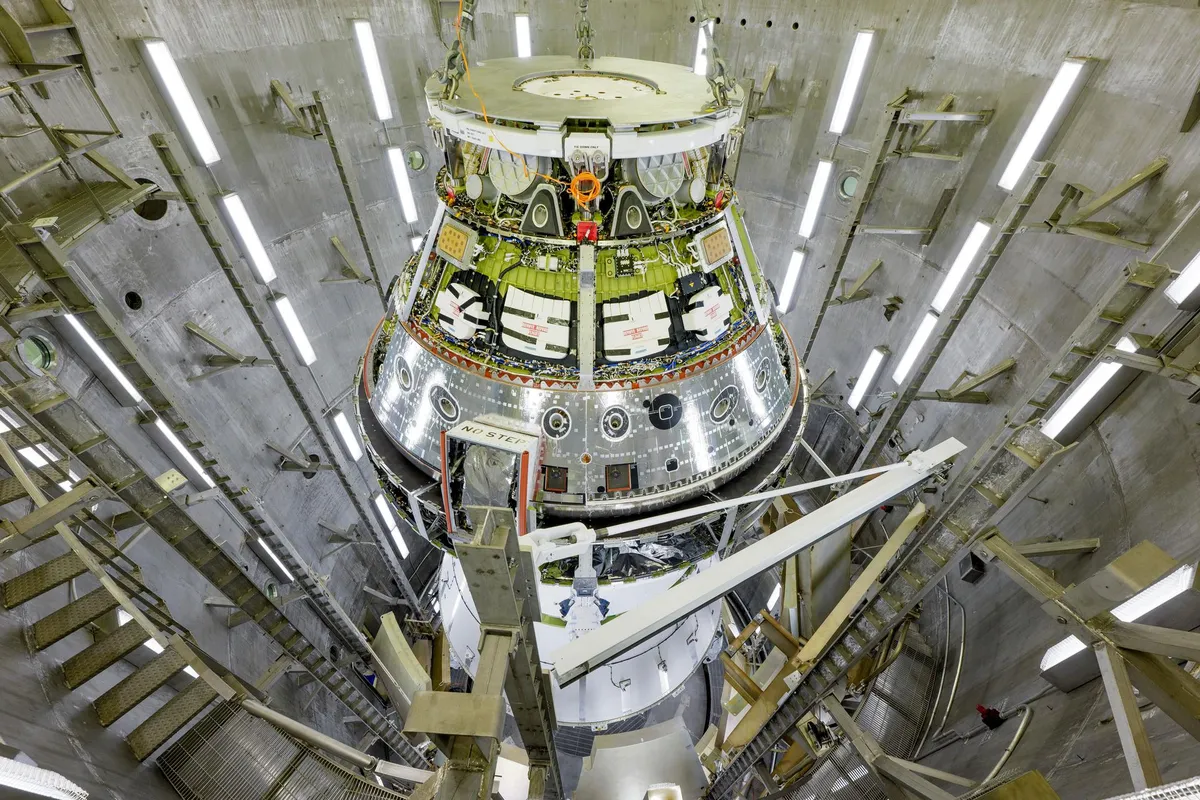
The NASA Artemis II heat shield performed well during re-entry on April 10, 2026.
The Orion spacecraft splashed down in the Pacific Ocean, just 2.9 miles from the targeted landing site.
Initial inspections found the heat shield kept the crew safe and showed no unusual conditions.
NASA stated, “Initial inspections of the system found it performed as expected, with no unusual conditions identified.” This is a significant improvement over Artemis I.
During Artemis I, unexpected damage was noted on the heat shield. However, for Artemis II, char loss behavior was significantly reduced.
NASA adjusted the re-entry trajectory to minimize heat build-up. The temperature around the capsule reached thousands of degrees Celsius—over 37,000 km/h during descent.
Navy divers photographed the heat shield shortly after splashdown. The shield is covered with special AVCOAT tiles designed to absorb impact heat.
Yet, not all systems operated flawlessly. The life support system experienced issues with the space toilet during the flight.
Experts are optimistic about future missions. The Artemis III mission is set for 2027, focusing on lunar landing.
Artemis IV follows in 2028, aiming for astronauts at the Moon’s south pole.
NASA plans to transport the heat shield to Marshall Space Flight Center for further examination.
Details remain unconfirmed regarding any long-term implications of these findings for future missions.
