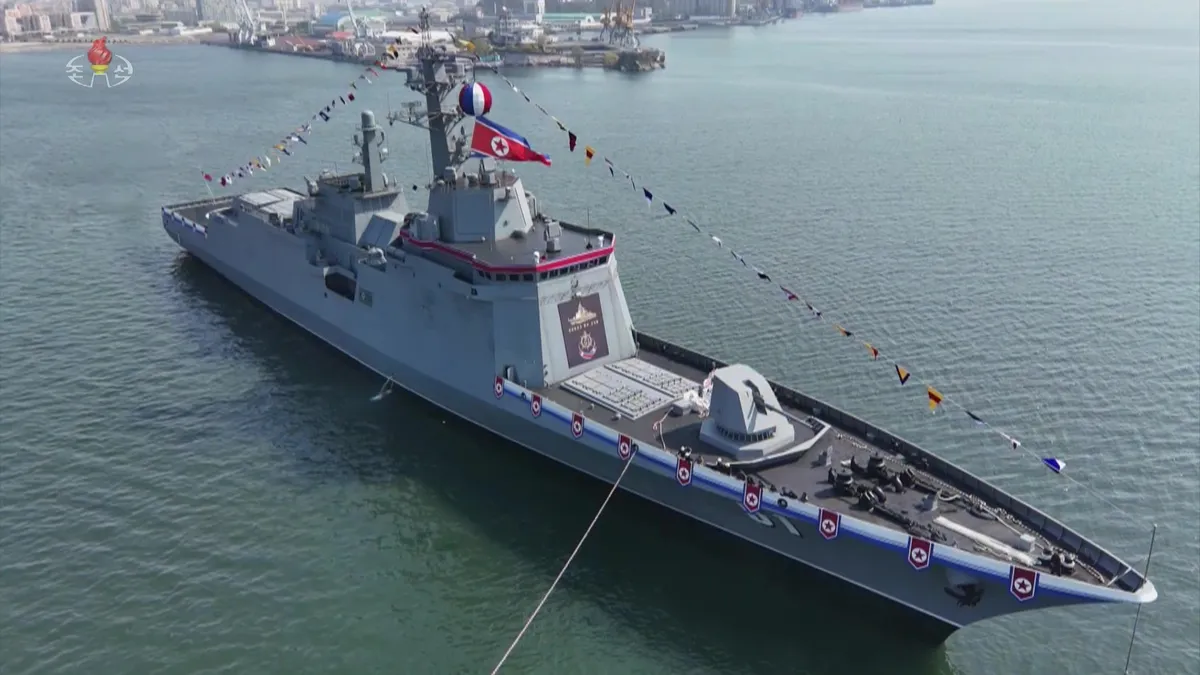
On April 14, 2026, the North Korean destroyer Choe Hyon demonstrated its military prowess by successfully launching two cruise missiles and three anti-ship missiles. This event marks a significant milestone in North Korea’s ongoing efforts to enhance its naval capabilities amid escalating tensions with South Korea.
Kim Jong Un personally observed the missile launches, which took place from the Choe Hyon, a 5,000-ton-class destroyer that was first unveiled in April 2025. The cruise missiles reportedly flew for over two hours, while the anti-ship missiles maintained flight for more than 30 minutes, showcasing the advanced technology integrated into the warship.
The Choe Hyon is designed to carry a variety of weapons, including anti-air and anti-ship munitions, as well as nuclear-capable ballistic and cruise missiles. Kim Jong Un has hailed the development of this destroyer as a major step toward expanding North Korea’s operational reach and preemptive strike capabilities. He emphasized that the government remains focused on the “limitless expansion” of its nuclear forces.
In a broader context, North Korea’s military enhancements come as relations with South Korea continue to deteriorate. The Choe Hyon-class destroyer is part of a strategic initiative to bolster naval capabilities, and Kim has called for the construction of two additional destroyers in 2026, indicating an acceleration in the formation of a destroyer flotilla rather than deploying isolated platforms.
Last month, Kim Jong Un supervised similar missile tests from the Choe Hyon, further underscoring the importance of this warship in North Korea’s military strategy. The ultra-precision accuracy of the cruise missiles launched from the destroyer has raised concerns among regional observers regarding North Korea’s growing military capabilities.
As North Korea continues to develop its naval forces, the construction of a third destroyer of the same class is already underway at the Nampo shipyard. This rapid expansion of military assets reflects Kim’s commitment to strengthening what he describes as the country’s nuclear war deterrent, which remains a top priority for his administration.
The recent missile launches and ongoing military developments signify a critical juncture for North Korea, as it seeks to assert its power in the region. The implications of these advancements are significant, not only for North Korea but also for its neighbors and the international community, which remains vigilant in monitoring the situation.
