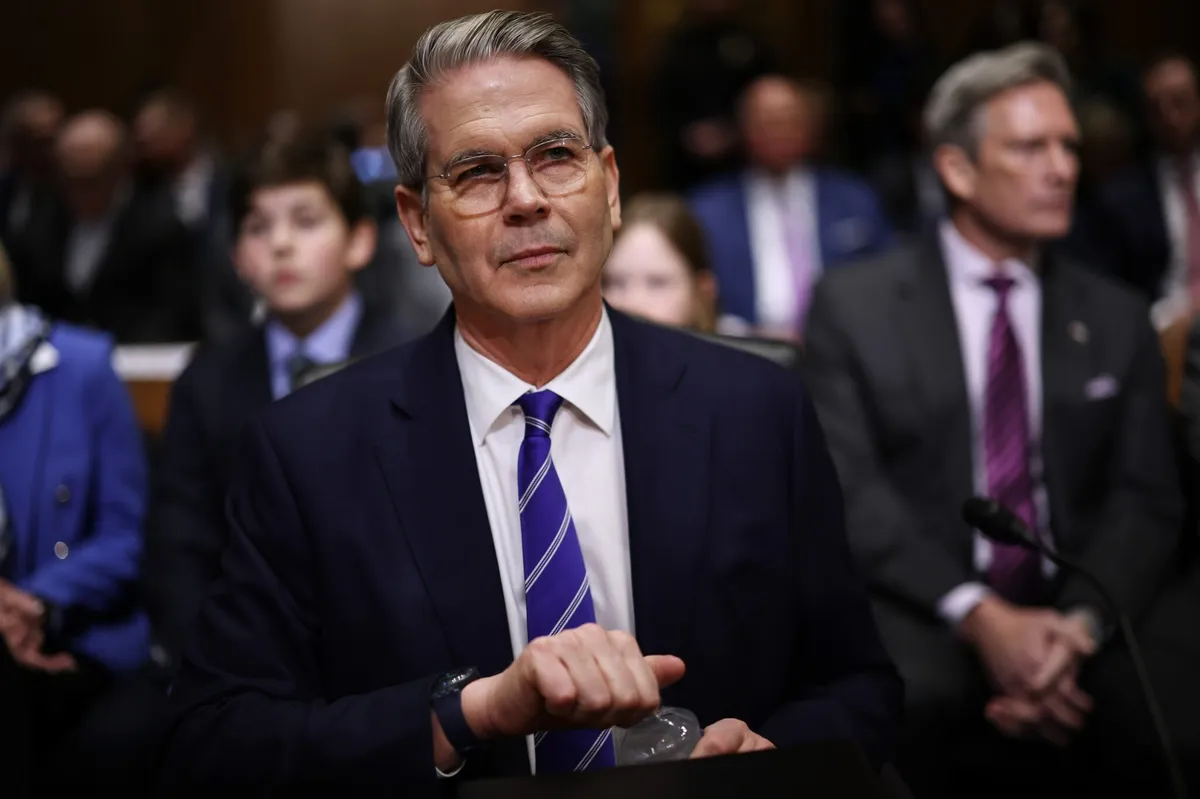
Scott Bessent, the US Treasury Secretary, has called for the Federal Reserve to exercise caution regarding interest rate cuts, particularly in light of the ongoing Iran war and rising inflation. Bessent emphasized the need to “wait and see” before making any decisions that could impact the economy.
In a recent statement, Bessent noted that the US economy showed resilience in January and February, despite challenges. However, consumer prices surged by 0.9% month-over-month, marking the largest increase in nearly four years. This spike raises concerns about inflationary pressures that could affect economic stability.
Excluding food and energy, inflation still rose by 0.2% month-over-month and 2.6% year-over-year, indicating persistent price pressures that complicate the Federal Reserve’s decision-making process. Bessent’s comments reflect a growing consensus among economists that the current economic landscape requires careful navigation.
In a related development, Bessent and Federal Reserve Chair Jerome Powell convened a meeting with CEOs from major banks, including Citigroup, Morgan Stanley, Bank of America, Wells Fargo, and Goldman Sachs, to discuss cybersecurity risks associated with Anthropic’s AI model. Notably, JPMorgan CEO Jamie Dimon was unable to attend.
During the meeting, it was revealed that Anthropic’s AI model had identified thousands of zero-day vulnerabilities across major operating systems and web browsers, raising alarms about potential security threats. The Pentagon has classified these vulnerabilities as a national security risk, underscoring the urgency of addressing cybersecurity in the financial sector.
Bessent’s remarks reflect a broader concern about the interplay between economic stability and geopolitical tensions. He stated, “If ever there was ‘Team Transitory,’ it’s this,” highlighting the unpredictable nature of current economic conditions.
As the situation evolves, Bessent acknowledged that there may be a need for “make-up” in economic policy to address the challenges posed by inflation and security risks. He expressed optimism about the future, suggesting that we may look back and recognize the importance of stability in the coming years.
Details remain unconfirmed regarding the exact impact of these discussions on future Federal Reserve policies, but the urgency of the situation cannot be overstated. The interplay between rising inflation and cybersecurity threats will likely shape the economic landscape in the months ahead.
